Why Calm Beats Pressure When It Comes to Health
Many people approach health goals with urgency, strict rules, or self-criticism. While this can create short bursts of motivation, it rarely leads to long-term success. A calmer relationship with your health goals supports consistency, emotional balance, and sustainable progress.
Health works best when it feels supportive — not demanding.
How Pressure Undermines Progress
When goals are driven by pressure, the nervous system stays in a heightened state. Over time, this can lead to:
- All-or-nothing thinking
- Guilt when routines slip
- Burnout or loss of motivation
- Repeated stop–start cycles
None of these support lasting wellbeing. Calm, on the other hand, creates space for learning and adjustment.
What a Calm Health Relationship Looks Like
1. Flexible Expectations
A calm approach allows goals to adapt to real life. Progress continues even when days aren’t perfect.
2. Process Over Outcomes
Focusing on daily habits rather than distant results reduces pressure and builds trust with yourself.
3. Self-Compassion
Treating setbacks as information — not failure — keeps momentum intact.
4. Gentle Accountability
Checking in with yourself regularly, without judgment, supports awareness and consistency.
Simple Ways to Cultivate Calm Around Health Goals
- Choose one or two priorities at a time
- Build routines that feel doable on low-energy days
- Celebrate completion, not intensity
- Schedule rest and recovery intentionally
- Notice how your body responds rather than forcing outcomes
Small, steady actions done calmly often outperform intense bursts of effort.
Nutrition & Calm Go Hand in Hand
Stable nourishment supports emotional regulation and decision-making. Regular meals, hydration, and balanced nutrients help reduce stress responses that can sabotage consistency.
When the body feels supported, the mind follows.
Feel Safe And Supportive
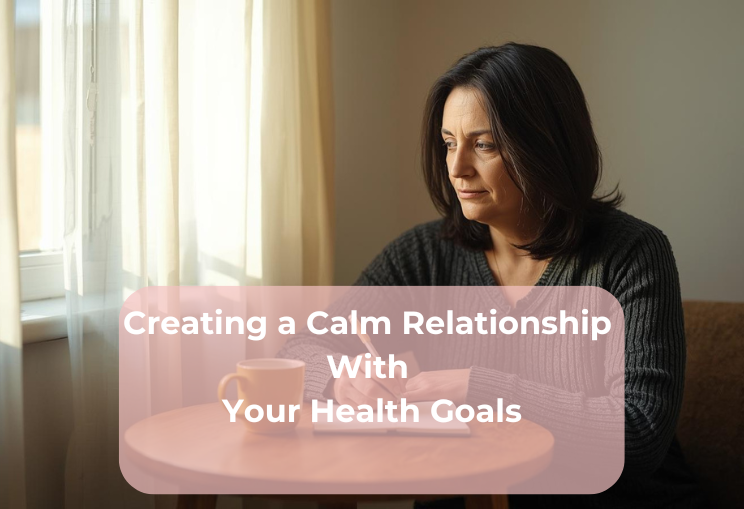
Creating a calm relationship with your health goals isn’t about lowering standards — it’s about raising sustainability. When goals feel safe and supportive, they become part of daily life rather than something to battle.
Long-term wellbeing grows best in calm conditions.