The Problem With Relying on Motivation
Motivation often feels exciting — but it’s also unpredictable. Some days it’s strong, other days it disappears entirely. When health habits depend on motivation alone, consistency becomes fragile.
This is why many people struggle to maintain routines long term, even when they truly care about their wellbeing.
What Gentle Discipline Really Means
Gentle discipline isn’t strict or punishing. It’s about showing up in small, consistent ways, even when motivation is low.
It looks like:
- simple routines
- realistic expectations
- flexibility without quitting
- progress without pressure
Gentle discipline creates structure that supports you — rather than controlling you.
Why Discipline Supports Health Better Than Motivation
Health habits work best when they:
- reduce decision fatigue
- feel familiar rather than forced
- fit into daily life naturally
Discipline provides a stable framework, allowing habits to continue even during busy, tired, or emotionally heavy days.
Examples of Gentle Discipline in Daily Life
1. Same Time, Small Action
Doing a short walk, stretch, or hydration routine at the same time daily builds rhythm without overwhelm.
2. Minimum Viable Habits
On low-energy days, doing the “small version” of a habit keeps the chain intact.
3. Consistency Over Intensity
Gentle discipline focuses on showing up, not pushing harder.
How Gentle Discipline Supports the Nervous System
Predictable routines help the nervous system feel safe. When the body knows what to expect, stress responses tend to soften — supporting digestion, sleep, and recovery.
This makes gentle discipline especially helpful during midlife, when stress tolerance can fluctuate.
Letting Go of Perfection
Discipline doesn’t mean doing things perfectly. It means returning to supportive habits without guilt when life interrupts.
This mindset builds resilience rather than burnout.
Allowing Flexibility Helps Health Habits
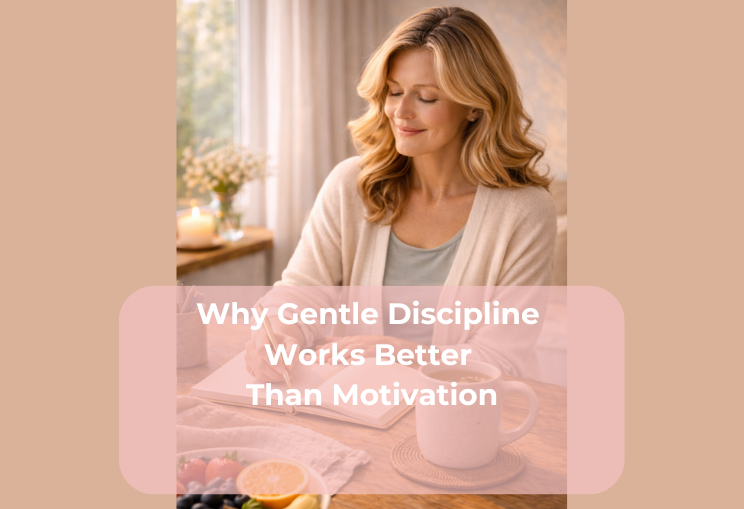
Motivation comes and goes — but gentle discipline stays. By choosing small, repeatable actions and allowing flexibility, health habits become something you live with, not something you fight to maintain.
Consistency doesn’t need force. It needs kindness.