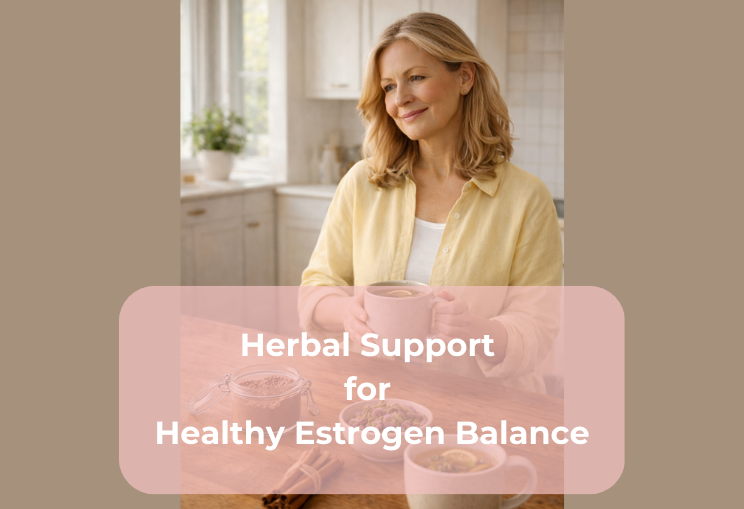
Hormone balance becomes a more common topic in midlife — especially during perimenopause and menopause.
Estrogen levels naturally fluctuate and decline over time. The goal isn’t to “force” balance, but to support the body’s natural rhythms gently.
Herbal support can be one part of a broader wellness approach.
Understanding Estrogen Balance
Estrogen plays a role in:
- Bone density
- Skin elasticity
- Mood regulation
- Temperature regulation
- Cardiovascular health
Balance matters more than high or low alone.
Lifestyle, stress, nutrition, and sleep all influence hormone patterns.
🌿 Herbs Often Associated with Estrogen Support
1️⃣ Red Clover
Contains phytoestrogens — plant compounds that may interact gently with estrogen receptors.
Often discussed in midlife wellness circles for temperature regulation and comfort.
2️⃣ Black Cohosh
Traditionally used to support menopausal comfort, particularly during hot flashes.
It does not act exactly like estrogen but may support symptom management.
3️⃣ Flaxseed
Rich in lignans (a type of phytoestrogen) and fibre, which may support hormonal balance through digestive pathways.
4️⃣ Chasteberry (Vitex)
Often associated with hormone rhythm support, particularly in earlier hormonal transitions.
5️⃣ Adaptogenic Herbs
Ashwagandha and rhodiola don’t directly alter estrogen, but may support stress balance — which influences hormonal stability overall.
Foundational Factors Matter More
Herbs work best when supported by:
- Balanced blood sugar
- Adequate protein
- Healthy fats
- Sufficient magnesium
- Stress management
- Regular movement
Hormone balance is rarely about one single supplement.
🌿 Gentle Supplement Note
Some people choose targeted herbal blends or hormone-support nutrients as part of a broader wellness routine.
If you’d like personalised supplement guidance based on your health goals, you can try the free health assessment here. It’s simple, private, and designed to help you understand which nutrients may support you best.
Nutrition, Stress Care And Sleep
Healthy estrogen balance isn’t about extremes.
It’s about steady support — nutrition, stress care, sleep, movement, and thoughtful herbal options when appropriate.
Small adjustments, layered over time, often create the most sustainable changes.