Health isn’t only about nutrients, workouts, or meal plans.
It’s also about trust.
Self-trust is built quietly — through small promises kept consistently.
After 50, chasing extreme changes often backfires.
But small, steady health wins can rebuild confidence in your body and your choices.
Let’s look at how.
Why Self-Trust Matters
When you trust yourself, you:
• Follow through more often
• Reduce guilt around setbacks
• Make steadier decisions
• Feel less pulled by trends
Self-trust lowers stress.
And lower stress supports better health outcomes overall.
The Power of Small Wins
Small wins might look like:
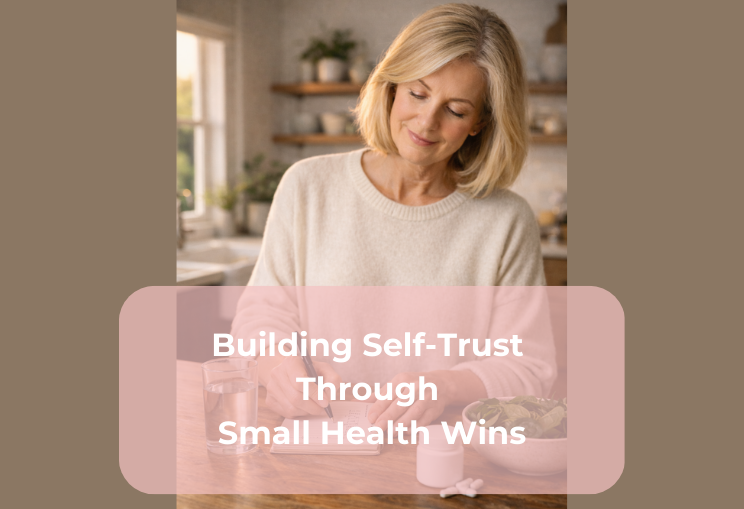
• Drinking an extra glass of water
• Walking 15 minutes daily
• Adding one serving of leafy greens
• Going to bed 20 minutes earlier
• Taking your supplements consistently
These actions are simple.
But when repeated, they send a powerful message:
“I keep my word to myself.”
Avoid the All-or-Nothing Trap
Many people sabotage self-trust by aiming too high.
They promise:
• 6 workouts a week
• Zero sugar
• Perfect sleep
• Total lifestyle overhaul
Then life happens.
And confidence drops.
Small commitments are more sustainable.
Sustainability builds belief.
Track What You Complete — Not What You Miss
Instead of focusing on what didn’t happen, track what did.
Even a simple checklist can reinforce:
“I showed up today.”
Momentum grows from completion.
Not perfection.
A Gentle Supplement Note
Taking foundational nutrients consistently — such as a balanced multivitamin or magnesium — can become part of your daily self-trust ritual.
The key isn’t quantity.
It’s consistency.
Supplements should support your structure, not replace it.
Rhythm Is Sustainable
Self-trust affects:
• Food choices
• Exercise consistency
• Sleep discipline
• Emotional resilience
When you build trust in small ways, larger goals feel possible.
Health becomes less about force.
More about rhythm.
And rhythm is sustainable.