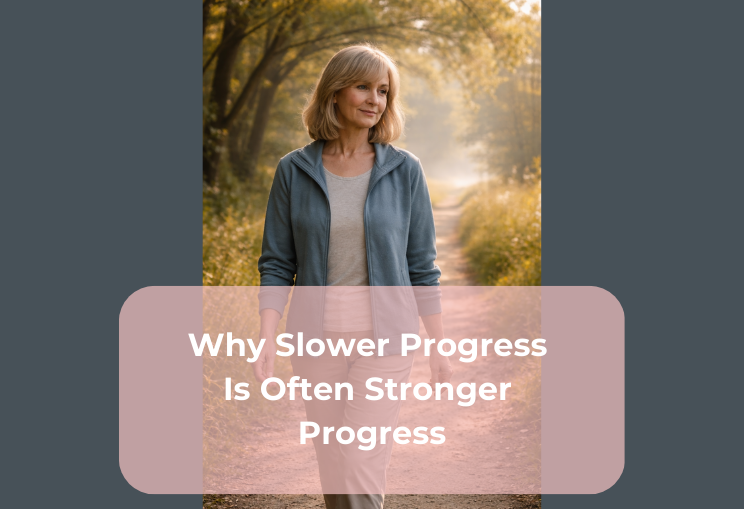
There’s a quiet shift that happens after 50.
You stop chasing speed.
You begin valuing stability.
In health, relationships, and personal goals, slower progress often builds deeper roots.
Fast Progress Feels Exciting
Rapid change can feel motivating:
- Sudden weight loss
- Intense workout bursts
- Strict routines
- Dramatic resets
But fast movement often relies on intensity rather than sustainability.
And intensity is difficult to maintain.
Slower Progress Builds Structure
Steady progress looks different:
- Walking daily instead of extreme workouts
- Balanced meals instead of strict diets
- Gradual strength training
- Gentle evening rituals
It may not feel dramatic.
But it builds consistency.
Consistency becomes resilience.
The Biology of Steady Change
After 50:
- Recovery takes longer
- Hormones respond better to stability
- The nervous system benefits from calm repetition
Sudden extremes can increase stress load.
Gradual improvements reduce friction.
The body adapts best to what is repeated calmly.
Signs You’re Building Strong Progress
You might notice:
- Fewer energy crashes
- Better sleep quality
- Improved mood stability
- Less inflammation
- Greater emotional regulation
None of these arrive overnight.
But they compound.
Why This Matters in Midlife
Midlife is not about acceleration.
It’s about sustainability.
When habits are:
- Moderate
- Balanced
- Repeatable
They become part of identity.
And identity-driven habits last.
A Gentle Perspective Shift
Instead of asking:
“How fast can I change?”
Ask:
“How long can I sustain this?”
Strong progress is progress you can repeat.
Where Foundations Matter
Whether it’s:
- Nutrient balance
- Mineral support
- Protein intake
- Evening routines
- Stress management
The theme remains the same:
Steady beats scattered.
Some readers choose foundational nutritional support alongside whole-food habits — always optional, never extreme.
If helpful, balanced options can be explored here:
👉 https://www.livegood.com/wellnesschoices
Steadiness Always Compounds
Slower progress often feels less impressive.
But it is usually:
- More stable
- More sustainable
- More aligned with long-term health
After 50, strength is not measured by speed.
It’s measured by steadiness.
And steadiness always compounds.