Many people think of progress as constant activity.
Modern culture often encourages busy schedules, long to-do lists, and the idea that productivity requires continuous effort. While dedication and consistency are valuable, progress does not always come from constant movement.
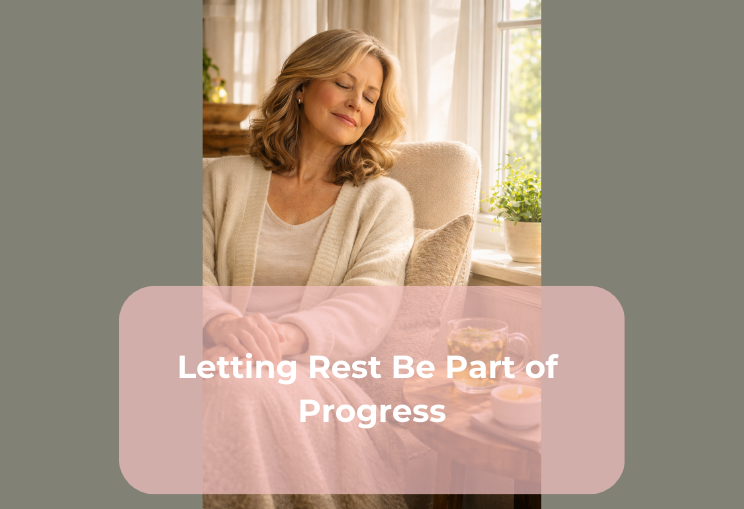
In many cases, rest is an essential part of progress.
Allowing time for recovery helps both the body and mind maintain balance, clarity, and long-term wellbeing.
For many people in midlife and beyond, learning to respect the role of rest can be one of the most helpful changes in daily routines.
Why Rest Supports Progress
Rest allows the body to recover from both physical and mental activity.
During periods of rest, the body carries out important processes that support overall wellbeing.
These processes may include:
• restoring energy levels
• regulating stress responses
• supporting mental clarity
• maintaining physical recovery
Without adequate rest, productivity often becomes less effective over time.
Mental Clarity Through Pauses
Short pauses throughout the day can help maintain focus and emotional balance.
Even a few minutes away from work or digital screens can refresh attention and reduce mental fatigue.
Some helpful pause habits include:
• stepping outside for fresh air
• stretching or moving briefly
• closing the eyes for a moment of quiet
These small pauses allow the nervous system to reset and regain clarity.
Rest and Sustainable Productivity
Progress that continues over months and years requires sustainability.
When routines include regular rest, it becomes easier to maintain steady effort without experiencing burnout.
Sustainable productivity often involves:
• balanced work periods
• regular breaks
• healthy sleep habits
• calm daily routines
These patterns allow progress to continue naturally over time.
Listening to the Body
The body often provides signals when rest is needed.
Fatigue, difficulty concentrating, or rising tension may simply indicate that recovery time is required.
Responding to these signals with short breaks or lighter activities can help maintain overall balance.
Learning to listen to these cues supports long-term wellbeing.
A Gentle Approach to Progress
Progress does not always need to feel intense or rushed.
A calm and steady approach often produces more sustainable results.
Many people find that combining focused effort with regular rest creates a rhythm that supports both productivity and wellbeing.
This rhythm allows progress to unfold naturally over time.
Steady Forward Movement
Rest is not the opposite of progress.
In many cases, it is one of the conditions that makes progress possible.
By allowing rest to become part of daily routines, it becomes easier to maintain energy, clarity, and steady forward movement.
Sometimes the most productive step forward is simply allowing the body and mind a moment to recover.