Balance is one of those things many people only think about when it starts to feel less automatic.
After 50, everyday confidence can be affected by simple things like getting out of a chair, walking on uneven ground, stepping off a kerb, using stairs, or moving around in low light. Better balance is not only about exercise — it is also connected to strength, attention, hydration, footwear, and daily habits.
Small steady routines may help support confidence and stability over time.
Start With Gentle Awareness
Balance often improves when people become more aware of how they move during normal daily life.
This may include noticing:
- How you stand up from a chair
- Whether you rush when walking
- How steady you feel on stairs
- Whether shoes feel supportive
- How tiredness affects your movement
Awareness is not about worrying. It is simply about paying attention so you can move with more confidence.
Gentle Strength Helps Support Stability
Balance is closely connected to muscle strength, especially in the legs, hips, and core.
Simple activities may include:
- Chair rises
- Gentle squats if suitable
- Slow walking
- Light resistance exercises
- Standing from a seated position without rushing
These habits do not need to feel intense. The goal is steady support for everyday movement.
Short Balance Practice Can Be Useful
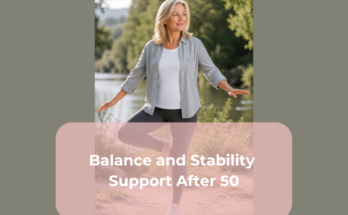
Some people include brief balance practice as part of a daily routine.
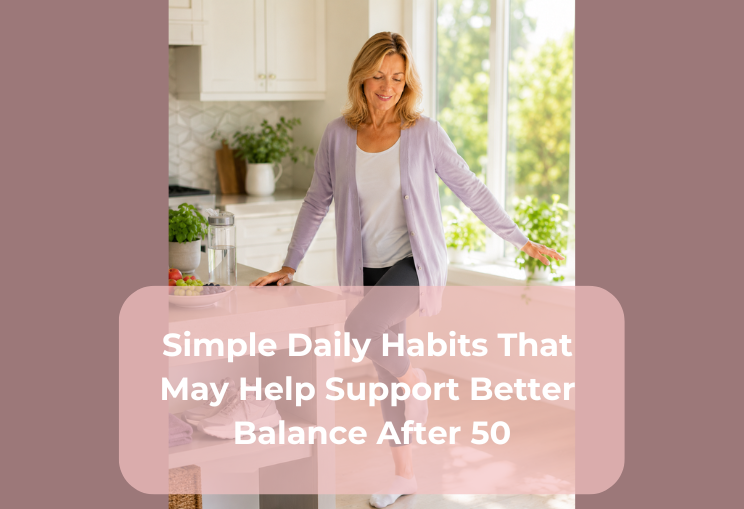
This might include standing near a kitchen counter or sturdy chair while gently practising:
- Standing with feet close together
- Shifting weight from one foot to the other
- Standing on one leg briefly
- Heel-to-toe walking in a safe space
Safety matters most. It is always better to practise near support rather than risk a fall.
Footwear Can Make A Difference
Shoes affect how secure people feel when walking.
Many people over 50 prefer footwear that offers:
- Good grip
- Comfortable support
- Secure fastening
- Stable soles
- Enough room for the toes
Comfortable supportive shoes may help everyday movement feel easier and more confident.
Hydration And Food Still Matter
Balance can sometimes feel worse when people are tired, dehydrated, or have not eaten properly.
Simple supportive habits may include:
- Drinking water regularly
- Eating balanced meals
- Including protein
- Avoiding long gaps without food
- Keeping lighter snacks available
Overall wellbeing often affects how steady and alert the body feels.
Slow Down During Transitions
Many wobbly moments happen during transitions rather than steady walking.
Examples include:
- Getting out of bed
- Standing up quickly
- Turning suddenly
- Carrying bags
- Stepping into the shower
- Walking in poor lighting
Taking a few extra seconds may help movement feel calmer and safer.
Confidence Builds Through Repetition
Better balance is rarely built in one dramatic moment.
It usually comes from small repeated habits — gentle strength, careful movement, supportive footwear, hydration, and calm awareness during everyday routines.
After 50, balance is really about protecting freedom, confidence, and independence for the years ahead.
You can also explore additional wellness support and personalised health suggestions through this free health assessment here: