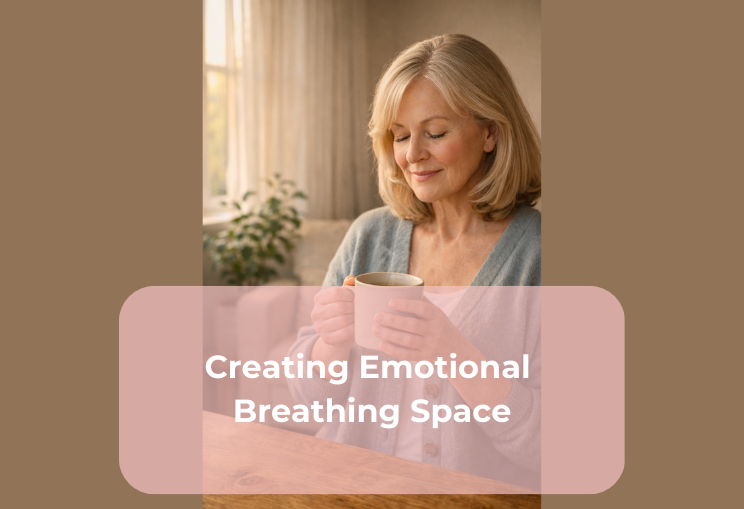
After 50, life is rarely quiet.
Responsibilities shift.
Health becomes more intentional.
Relationships evolve.
And sometimes the mind never stops.
Emotional breathing space is not about escaping life.
It is about creating small pockets of mental margin.
What Is Emotional Breathing Space?
It is the space between:
Stimulus and response.
Demand and reaction.
Thought and belief.
When that space shrinks, stress increases.
When that space widens, calm returns.
Why It Matters More After 50
Midlife often brings:
• Increased caregiving roles
• Financial considerations
• Health awareness
• Changing identity
Without breathing space, overwhelm builds quietly.
The nervous system remains on alert.
That affects:
Sleep.
Energy.
Hormonal rhythm.
Mood stability.
How To Create It Daily
1️⃣ Deliberate Pauses
Before replying.
Before agreeing.
Before reacting.
Three slow breaths is often enough.
2️⃣ Scheduled Quiet Windows
10–20 minutes with:
• No phone
• No conversation
• No task
Just presence.
3️⃣ Reduce Information Intake
Limit:
• News cycles
• Social media scrolling
• Constant notifications
Mental clutter compresses emotional space.
4️⃣ Gentle Physical Reset
Slow walking.
Light stretching.
Simple breath work.
The body influences the mind.
A Supportive Nutritional Note
Magnesium, adaptogenic herbs, and balanced protein intake can complement emotional steadiness when paired with healthy lifestyle routines.
But supplements are supportive — not primary.
Breathing space begins with boundaries.
Calm Is Built Intentionally
Emotional breathing space is not dramatic.
It is subtle.
A pause.
A boundary.
A quiet moment reclaimed.
After 50, protecting mental margin protects everything else.
Calm is built intentionally.
And it compounds.