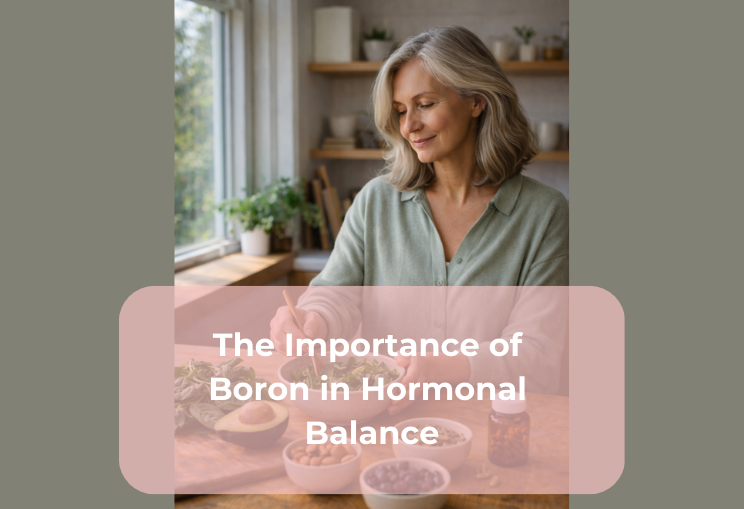
Boron isn’t a mineral we hear about very often.
It doesn’t get the attention of magnesium or vitamin D.
Yet quietly, it plays a supportive role in hormonal balance — particularly after 50.
Sometimes the smallest nutrients do subtle but meaningful work.
What Is Boron?
Boron is a trace mineral found naturally in:
- Leafy greens
- Almonds
- Raisins
- Avocados
- Prunes
Because it’s needed in small amounts, it’s often overlooked.
But “small” doesn’t mean unimportant.
How Boron Supports Hormonal Balance
Research suggests boron may help:
- Support healthy oestrogen levels
- Support healthy testosterone levels
- Improve vitamin D utilisation
- Assist magnesium balance
- Promote bone strength
After 50, these areas become increasingly relevant.
Hormonal shifts affect:
- Bone density
- Mood stability
- Joint comfort
- Energy levels
Boron appears to act as a quiet regulator within that system.
Boron and Bone Health After 50
Bone health is not just about calcium.
It also relies on:
- Vitamin D
- Magnesium
- Vitamin K
- Trace minerals like boron
Boron may help the body use calcium and magnesium more efficiently.
That makes it part of the wider structural picture.
Not the star — but part of the team.
Boron and Vitamin D
Vitamin D plays a crucial role in immune and hormone regulation.
Some research suggests boron may support vitamin D activity in the body.
That connection is particularly relevant in the UK, where vitamin D levels can be lower due to limited sun exposure.
Should You Supplement Boron?
Many people obtain small amounts through diet.
However, modern soil depletion and food processing may reduce mineral content.
If you are considering supplementation:
- Keep doses modest
- Avoid excessive intake
- Look for balanced mineral formulas rather than isolated megadoses
As always, consult your GP if you are on medication or managing medical conditions.
Gentle Foundation Support
Often, boron is included within broader mineral or multivitamin blends.
Some people choose comprehensive formulations that include trace minerals alongside magnesium, vitamin D, and K2 — supporting a balanced approach rather than focusing on one nutrient alone.
If you’re exploring steady foundational support, balanced options can be viewed here (entirely optional):
👉 https://www.livegood.com/wellnesschoices
Steady Support Often Matters Most
Hormonal balance after 50 isn’t about chasing dramatic solutions.
It’s about understanding the full nutritional picture.
Small minerals.
Steady inputs.
Long-term structural support.
Boron may not be widely discussed — but it plays a subtle role within the wider hormonal and bone health system.
And subtle, steady support often matters most.