Red blood cells quietly do one of the most important jobs in your body.
They carry oxygen from your lungs to your tissues — supporting energy, mental clarity, circulation, and overall vitality.
When red blood cell production slows or nutrient intake drops, you may begin to notice subtle changes:
• Fatigue
• Pale skin
• Shortness of breath
• Feeling cold more often
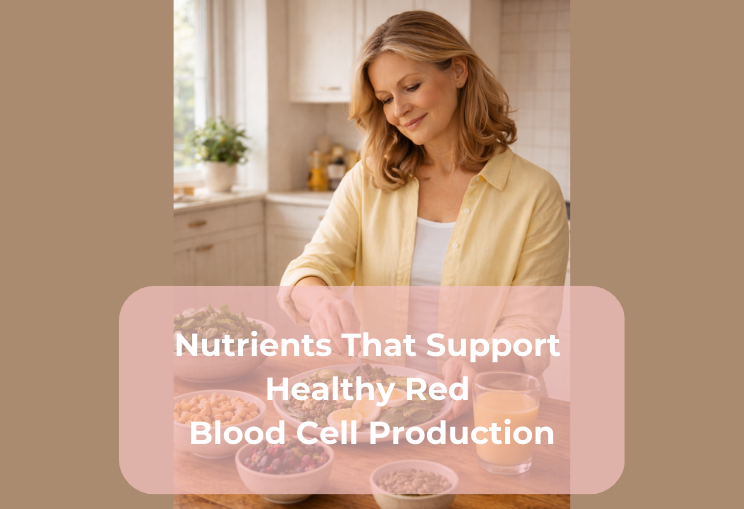
The good news is that your body relies on very specific nutrients to support healthy red blood cell formation — and these can often be supported through mindful nutrition.
Let’s walk through them calmly and clearly.
1️⃣ Iron
Iron is perhaps the most well-known nutrient linked to red blood cell production.
It is essential for making hemoglobin — the protein in red blood cells that binds to oxygen.
Good sources include:
• Lean red meat
• Lentils
• Spinach
• Pumpkin seeds
• Fortified cereals
Women, especially after midlife, should ensure they’re not unintentionally under-consuming iron-rich foods.
2️⃣ Vitamin B12
Vitamin B12 plays a key role in proper red blood cell formation and DNA synthesis.
Low B12 levels can lead to large, immature red blood cells that don’t function efficiently.
Sources include:
• Eggs
• Fish
• Dairy
• Fortified plant milks
As we get older, absorption of B12 can decline — which makes this one especially important to monitor.
3️⃣ Folate (Vitamin B9)
Folate works closely with B12 to support cell division and red blood cell production.
Natural sources include:
• Dark leafy greens
• Beans
• Avocado
• Asparagus
This nutrient is essential for healthy tissue renewal and steady oxygen transport.
4️⃣ Vitamin B6
Vitamin B6 helps the body produce hemoglobin.
It also supports nervous system health and balanced energy metabolism.
Found in:
• Chickpeas
• Bananas
• Poultry
• Potatoes
5️⃣ Copper
Less discussed but equally important — copper helps the body properly utilize iron.
Without enough copper, iron transport can be impaired.
Good sources:
• Nuts
• Seeds
• Whole grains
Supporting Absorption Matters Too
Vitamin C enhances iron absorption significantly.
Pairing iron-rich foods with:
• Citrus
• Bell peppers
• Strawberries
can make a noticeable difference.
A Gentle Supplement Note
While food should always be the foundation, some people choose to support their intake with high-quality supplements — especially B-complex formulas or multivitamins.
For example, a clean men’s or women’s multivitamin with iron, B12, folate, and B6 can offer balanced daily support without megadosing.
As always, speak with your healthcare provider before supplementing — particularly if you suspect anemia.
Calm Nourishment Steady Support
Healthy red blood cells support:
• Steady energy
• Clear thinking
• Healthy circulation
• Comfortable daily movement
Sometimes feeling “low energy” isn’t about motivation.
It’s about nutrients.
And small nutritional adjustments can create meaningful shifts over time.
Calm nourishment.
Steady support.
Quiet vitality.