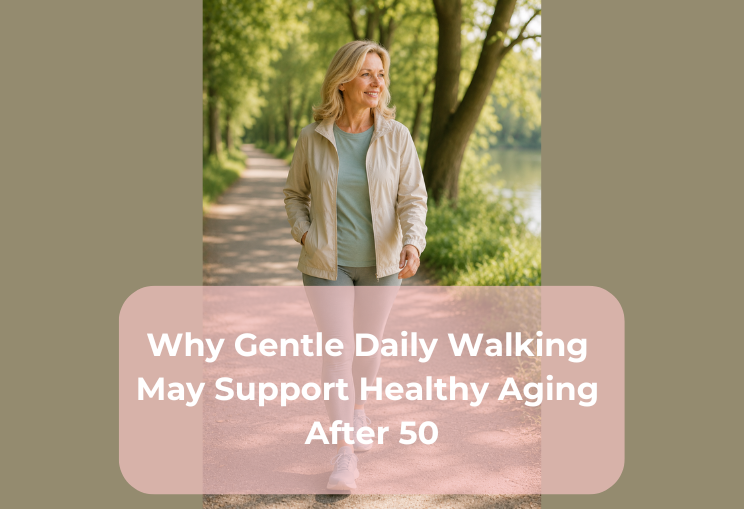
Healthy aging is often built through small consistent habits rather than intense short-term efforts.
Walking remains one of the simplest and most practical forms of movement available to many people. It does not require expensive equipment, complicated routines, or high levels of fitness to begin.
Even gentle daily walking may help support both physical and mental wellbeing over time.
The goal is not perfection or speed — simply regular movement that feels manageable and sustainable.
Walking Encourages Gentle Full-Body Movement
The body is designed to move regularly throughout the day.
Walking may help support:
- Joint mobility
- Circulation
- Muscle activity
- Balance and coordination
- Everyday flexibility
Some people find that short steady walks feel easier to maintain than demanding workout programs that become exhausting or uncomfortable.
Consistency usually matters more than intensity.
Fresh Air And Daylight Can Feel Restorative
Walking outdoors may also offer emotional benefits alongside physical movement.
Natural daylight, changing scenery, and time away from screens can sometimes help the mind feel calmer and less overwhelmed.
Even a slow walk around the local area or nearby park may create a welcome mental reset during stressful periods.
Many people notice they feel mentally clearer after simply getting outside for a little while.
Short Walks Still Count
Walking does not need to involve long distances or difficult hills to be worthwhile.
Small amounts of movement throughout the day can still add up gradually over time.
Some realistic ideas include:
- A gentle morning walk
- Walking while talking on the phone
- Parking slightly further away
- Light evening strolls
- Indoor walking during bad weather
Practical habits are often easier to continue long term because they fit naturally into normal life.
Walking May Help Support Balance And Confidence
As we grow older, confidence with movement can sometimes become just as important as strength itself.
Regular walking may help people feel more comfortable staying active and mobile during everyday tasks.
Some people also combine walking with simple balance exercises or light stretching routines to support stability and coordination.
Gentle movement often creates momentum for other healthy habits too.
Comfortable Routines Matter More Than Perfection
There is no need to compare your pace or distance with anyone else.
A calm steady approach is usually more sustainable than pushing too hard and losing motivation. Some days may involve longer walks, while others may simply involve moving around the house more regularly.
What matters most is continuing to move in ways that feel realistic and supportive.
Small Habits Quietly Build Over Time
Many healthy routines work gradually in the background.
Walking may not feel dramatic from day to day, but small actions repeated consistently can quietly support long-term wellbeing over the years ahead.
The important thing is building routines that feel kind, achievable, and maintainable.
You can also explore additional wellness support and personalised health suggestions through this free health assessment here: