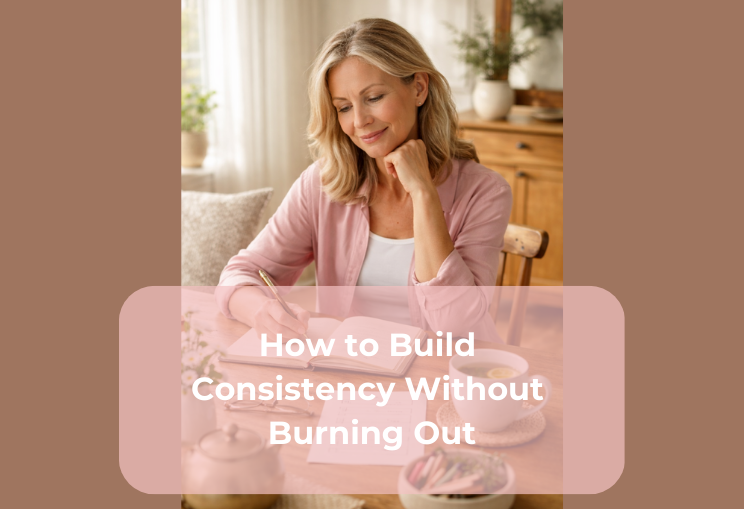
Consistency often gets confused with intensity.
But long-term wellness isn’t built through bursts of motivation. It’s built through steady, repeatable habits that don’t overwhelm your nervous system.
Especially in midlife, the goal isn’t more effort.
It’s better rhythm.
Why Burnout Happens
Burnout usually comes from:
- Doing too much too quickly
- Setting unrealistic expectations
- Comparing yourself to others
- Ignoring energy levels
- All-or-nothing thinking
The body and mind respond better to sustainable patterns.
What Real Consistency Looks Like
Consistency doesn’t mean perfection.
It means:
- Showing up imperfectly
- Adjusting when needed
- Returning without guilt
- Focusing on long-term direction, not daily emotion
You don’t need extreme discipline.
You need gentle discipline.
5 Ways to Stay Consistent Without Overwhelm
1️⃣ Make It Smaller Than You Think
Reduce the habit until it feels almost too easy.
2️⃣ Anchor It to an Existing Routine
Pair a new habit with something you already do daily.
3️⃣ Focus on Identity, Not Outcomes
Instead of “I want results,” think “I am someone who shows up.”
4️⃣ Track Progress Calmly
Simple check marks work better than obsessive monitoring.
5️⃣ Allow Recovery Days
Rest is part of progress — not a failure of it.
The Nervous System Factor
Consistency improves when your nervous system feels safe.
Overtraining, strict dieting, or pressure-based goals often trigger stress responses that reduce follow-through.
A steady system feels supportive, not urgent.
🌿 Gentle Supplement Note
Some people also find it helpful to support steady energy and stress resilience nutritionally — particularly with magnesium, B vitamins, and adaptogenic herbs.
If you’d like personalised supplement guidance based on your health goals, you can try the free health assessment here. It’s simple, private, and designed to help you understand which nutrients may support you best.
Habits Feel Manageable
The goal isn’t to be perfect.
The goal is to keep going — gently, steadily, without burning yourself out in the process.
When habits feel manageable, they become permanent.
And permanence creates results.