Life rarely moves in straight lines.
Plans change.
Unexpected news arrives.
Responsibilities shift.
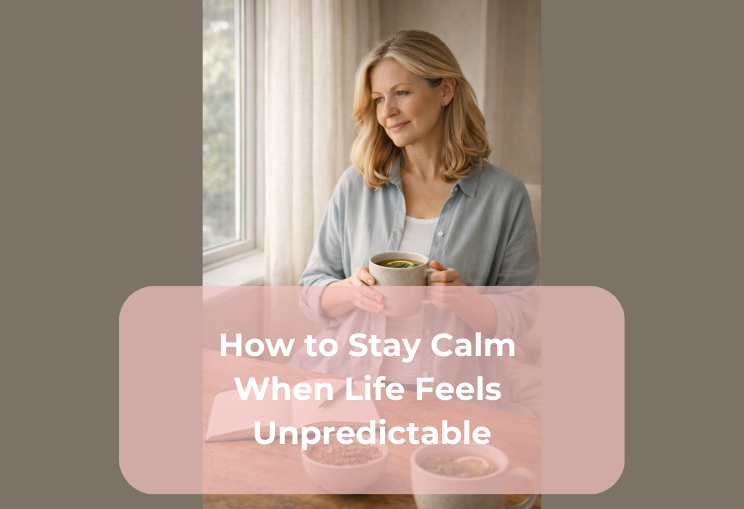
When life feels unpredictable, the goal isn’t to control everything — it’s to stabilise yourself.
Calm is a skill that can be practiced.
Step 1: Focus on What Is Stable
When external circumstances shift, anchor to:
- Your daily routine
- Your morning ritual
- Your evening wind-down
- Simple meals
- Consistent sleep timing
Stability in small areas creates safety in the body.
Step 2: Regulate the Nervous System First
Calm thinking comes after nervous system regulation.
Simple tools include:
- Slow nasal breathing
- A short walk outdoors
- Warm herbal tea
- Gentle stretching
- Reducing news or social media exposure
The body must feel safe before the mind can settle.
Step 3: Shrink the Time Frame
Instead of thinking months ahead, focus on:
- Today
- This afternoon
- The next hour
Smaller time frames reduce mental overwhelm.
Step 4: Protect Energy Inputs
Unpredictability often increases stress load.
During those times:
- Limit unnecessary commitments
- Simplify nutrition
- Prioritise rest
- Avoid high-sugar or high-caffeine coping
Energy conservation supports emotional balance.
Step 5: Support Stress Resilience Nutritionally
Periods of unpredictability can deplete:
- Magnesium
- B vitamins
- Adaptogenic capacity
- Sleep quality
Layering nutritional support may help the body handle stress more steadily.
🌿 Gentle Supplement Note
Some people choose magnesium, B vitamin complexes, or adaptogenic herbs to support stress resilience during demanding seasons.
If you’d like personalised supplement guidance based on your health goals, you can try the free health assessment here. It’s simple, private, and designed to help you understand which nutrients may support you best.
Create Internal Steadiness
You can’t always control life’s unpredictability.
But you can control your inputs.
Small, stabilising habits — repeated daily — create internal steadiness even when circumstances feel uncertain.
Calm is built, not found.