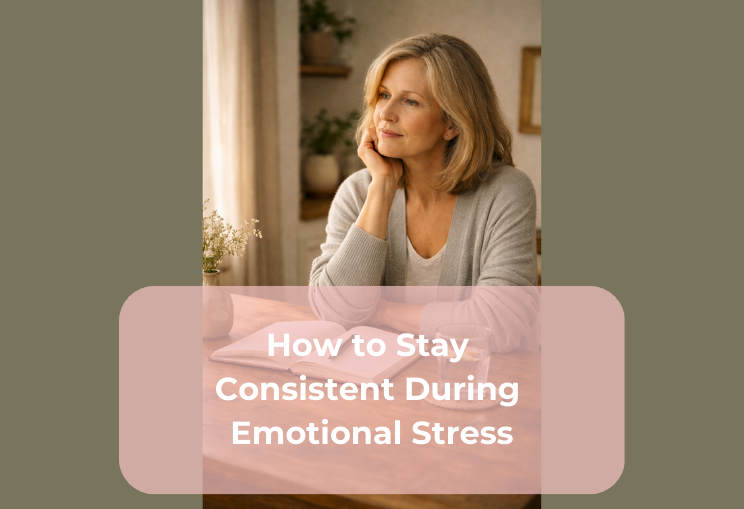
Emotional stress is inevitable.
After 50, it may come from:
• Health concerns
• Family responsibilities
• Financial pressures
• Changing life roles
The challenge is not avoiding stress.
It is maintaining consistency during it.
Why Stress Disrupts Habits
Stress activates the body’s survival response.
This can lead to:
• Skipped workouts
• Irregular meals
• Poor sleep
• Emotional eating
• Increased screen time
Under stress, we seek comfort and simplicity.
But abandoning healthy routines often increases long-term instability.
1️⃣ Shrink the Habit — Don’t Remove It
Instead of stopping entirely:
Walk 10 minutes instead of 30.
Stretch briefly instead of skipping movement.
Prepare one simple balanced meal instead of complex cooking.
Reduced consistency is better than no consistency.
2️⃣ Protect Your Non-Negotiables
Choose 2–3 anchors:
• Sleep schedule
• Protein intake
• Morning light exposure
Even during emotional strain, these stabilisers protect your system.
3️⃣ Lower Expectations, Maintain Rhythm
Stressful periods are not performance phases.
They are maintenance phases.
The goal shifts from improvement to preservation.
That mindset prevents all-or-nothing thinking.
4️⃣ Support the Nervous System
Calming practices help maintain consistency:
• Slow breathing
• Gentle evening routines
• Magnesium-rich foods
• Reduced evening stimulation
Stability in the nervous system supports stability in behaviour.
A Gentle Nutritional Note
During emotional stress, some individuals benefit from consistent foundational supplementation — particularly magnesium, omega-3s, and balanced multinutrients — to support nervous system resilience.
As always:
Consistency over experimentation.
Foundation over novelty.
Why This Matters After 50
The body becomes more sensitive to stress fluctuations with age.
Maintaining rhythm during difficult periods protects:
• Metabolic balance
• Sleep quality
• Emotional steadiness
• Long-term health outcomes
Consistency during stress builds resilience.
Stress Will Pass
You do not need perfection during emotional stress.
You need continuity.
Small habits.
Reduced expectations.
Maintained rhythm.
Stress will pass.
Consistency ensures you remain steady when it does.