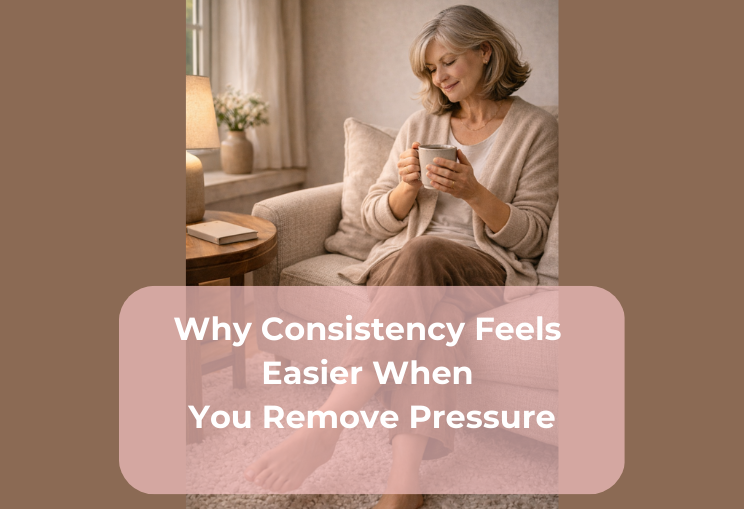
Consistency is often talked about as discipline, willpower, or “pushing through.”
But for many people, that approach quietly backfires.
When routines feel heavy or demanding, the nervous system doesn’t relax into them — it resists. Over time, that resistance turns into avoidance, guilt, or burnout.
The truth is simpler and kinder:
Consistency feels easier when it feels safe.
Pressure Creates Friction — Not Progress
Pressure usually shows up in subtle ways:
- “I must do this every day or I’ve failed.”
- “If I slow down, I’ll lose momentum.”
- “Other people are doing more than me.”
Even when the intention is good, pressure signals urgency to the body. The nervous system shifts into alert mode — and habits stop feeling supportive.
That’s when routines become harder to maintain, not easier.
Safety Is the Missing Ingredient in Long-Term Habits
When pressure is removed, something important happens:
- The body relaxes
- The mind stops negotiating
- Actions feel lighter
This is why gentle routines tend to stick.
They don’t rely on force.
They rely on trust — trusting that showing up calmly is enough.
Consistency built on safety doesn’t ask, “Can I push through this?”
It asks, “Can I return to this?”
Small, Calm Actions Compound Naturally
When routines feel manageable, repetition happens almost automatically.
Think of habits that last:
- making a warm drink in the evening
- taking a short walk
- choosing nourishing foods most days
- supporting your body with simple supplements
None of these require pressure. They work because they feel familiar and reassuring.
Over time, these small actions quietly compound — without stress, guilt, or urgency.
Why Removing Pressure Supports Emotional Resilience
Emotional resilience isn’t built by doing more.
It’s built by feeling supported while doing less.
When pressure is removed:
- the nervous system stabilises
- decision fatigue decreases
- routines stop feeling fragile
This creates a sense of internal safety — and safety is what allows consistency to return again and again.
A Gentle Way Forward
If consistency has felt difficult in the past, it’s worth asking:
- Where can I soften expectations?
- What feels supportive instead of demanding?
- What could I do most days rather than every day?
Consistency doesn’t need intensity.
It needs permission.
Calm, Familiar And Forgiving
Progress doesn’t disappear when pressure is removed — it often improves.
The most sustainable habits are the ones that feel calm, familiar, and forgiving. When you remove pressure, consistency stops feeling like effort and starts feeling like care.
And that’s when routines quietly become part of who you are.