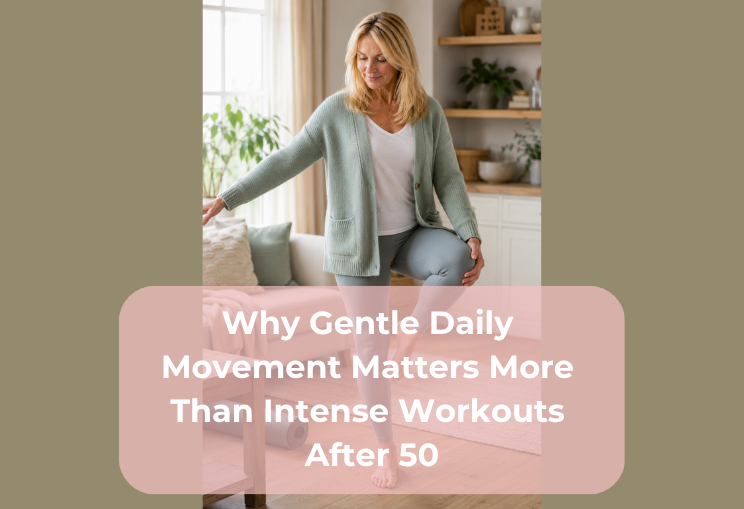
Exercise after 50 does not always need to be intense to be effective.
In fact, many people discover that gentle daily movement often feels more sustainable, more comfortable, and easier to maintain consistently long term.
Small regular movement habits can quietly support flexibility, circulation, balance, posture, and overall wellbeing without placing unnecessary strain on the body.
Consistency usually matters far more than intensity.
The Power of Daily Consistency
One of the biggest benefits of gentle movement is that it can fit naturally into everyday life.
Simple daily movement may help support:
- Joint mobility
- Muscle comfort
- Energy levels
- Circulation
- Balance
- Confidence with movement
Even short sessions done regularly can gradually build noticeable long-term benefits over time.
Movement Does Not Need to Be Complicated
Many healthy movement habits require very little equipment and can often be done at home.
Simple examples include:
- Walking
- Gentle stretching
- Balance exercises
- Light cycling
- Chair exercises
- Bodyweight movements
- Mobility routines
The goal is not perfection or exhaustion.
The goal is simply keeping the body moving consistently and comfortably.
Balance and Stability Become Increasingly Important
After 50, many people begin paying more attention to stability and balance as part of healthy aging.
Gentle balance-focused movements may help support:
- Coordination
- Confidence
- Mobility
- Everyday independence
Simple one-leg stands, controlled stepping movements, or gentle mobility exercises can become valuable additions to a daily routine.
Recovery Matters Too
One reason gentle movement often works well long term is because recovery tends to feel easier.
Extremely intense exercise can sometimes leave people overly tired, sore, or discouraged if it becomes difficult to maintain consistently.
Gentler approaches often feel:
- More realistic
- Easier to recover from
- More sustainable
- Easier to repeat daily
Long-term consistency usually creates better results than occasional extremes.
Small Daily Habits Add Up
Many people underestimate how much small daily movement habits can compound over months and years.
Simple activities like:
- Daily walks
- Stretching routines
- Light cycling
- Gardening
- Standing mobility work
…may all contribute positively to overall long-term wellbeing when performed consistently.
Listen to Your Body
Healthy movement after 50 is often about working with the body rather than against it.
Some days may feel stronger than others, and that is completely normal.
Steady routines, gradual progress, and sensible recovery often create a healthier long-term relationship with exercise.
Why This Matters for You
Movement does not need to become extreme to support healthy aging.
Very often, the routines that help most are the ones gentle enough to continue consistently year after year.
Small steady habits may not always feel dramatic in the moment, but over time they can quietly support strength, mobility, confidence, and wellbeing in very meaningful ways.