Why Copper Matters More Than Many Realise
Copper is a trace mineral that plays an essential role in several foundational processes in the body. One of its most important functions is supporting red blood cell formation, which helps transport oxygen throughout the body.
Although needed only in small amounts, copper works closely with other nutrients to support energy, circulation, and overall vitality.
Copper’s Role in Red Blood Cell Formation
Copper helps the body:
- utilise iron effectively
- support haemoglobin formation
- assist oxygen delivery to tissues
Without adequate copper, iron metabolism can become less efficient — even when iron intake is sufficient.
Copper and Everyday Vitality
By supporting healthy red blood cell function, copper contributes to:
- steady energy levels
- oxygen delivery to muscles and organs
- healthy circulation
- overall resilience
These processes quietly support how the body feels and performs day to day.
Copper Works Best as Part of a Team
Copper does not act alone. It works alongside:
- Iron — for oxygen transport
- Vitamin C — for mineral absorption and vessel support
- Zinc — in balanced ratios for immune and cellular health
Balance is key. More is not better — appropriate intake matters.
Natural Sources of Copper
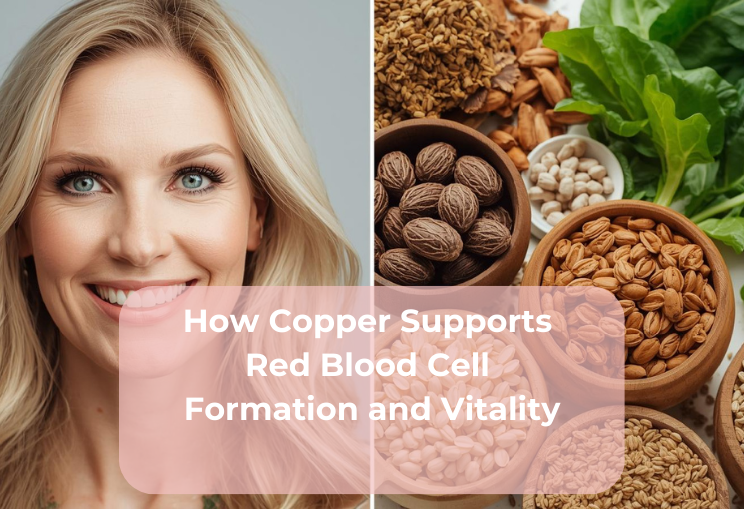
Copper can be found in foods such as:
- nuts and seeds
- legumes
- whole grains
- leafy greens
- certain fruits
A varied, whole-food diet usually provides small, steady amounts.
Copper and Midlife Health
After 50, supporting oxygen delivery and circulation becomes increasingly important for:
- energy
- movement
- recovery
- cognitive clarity
Ensuring trace minerals like copper are included as part of a balanced diet helps support these systems gently over time.
Gentle Supplement Considerations (Optional)
Some multivitamin or mineral blends include copper in carefully balanced amounts. Supplements should always be chosen with balance in mind, especially when combined with iron or zinc.
Vitality And Overall Wellbeing
Copper may be a trace mineral, but its impact is anything but small. By supporting red blood cell formation and oxygen delivery, it plays a quiet but essential role in vitality and overall wellbeing.
Sometimes, the smallest nutrients make the biggest difference.