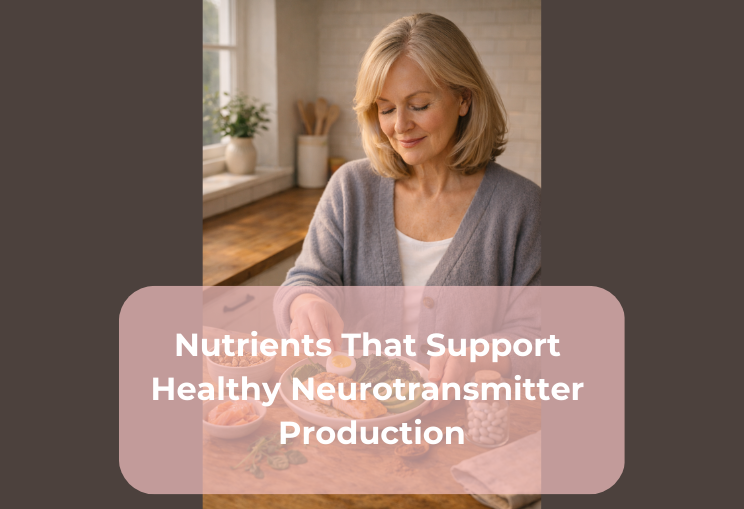
Neurotransmitters are chemical messengers in the brain.
They influence:
• Mood
• Focus
• Motivation
• Sleep
• Stress response
After 50, nutrition plays an increasingly important role in supporting their healthy production.
The goal is not stimulation.
It is balance.
What Are Neurotransmitters?
Common neurotransmitters include:
• Serotonin — associated with mood stability
• Dopamine — linked to motivation and reward
• GABA — supports calm regulation
• Acetylcholine — involved in memory and focus
These compounds rely on nutritional building blocks.
Without adequate support, production may become less efficient.
Key Nutrients Involved
1️⃣ Protein & Amino Acids
Neurotransmitters are built from amino acids.
Examples:
• Tryptophan → serotonin
• Tyrosine → dopamine
Adequate daily protein intake supports this process.
2️⃣ B Vitamins
Especially:
• B6
• B12
• Folate
These assist in neurotransmitter synthesis and regulation.
3️⃣ Magnesium
Often associated with:
• Nervous system regulation
• Stress modulation
• GABA support
Magnesium intake tends to decline with age.
4️⃣ Omega-3 Fatty Acids
Support brain cell membrane structure and communication efficiency.
Found in:
• Oily fish
• Flaxseed
• Walnuts
5️⃣ Zinc & Iron
These trace minerals contribute to enzymatic processes involved in neurotransmitter pathways.
Lifestyle Still Matters
Nutrition supports neurotransmitter production.
But balance also depends on:
• Sleep quality
• Morning light exposure
• Physical activity
• Emotional boundaries
Food and habits work together.
A Gentle Nutritional Note
Some individuals choose high-quality multinutrient formulas or magnesium blends to complement whole-food intake, particularly during periods of increased stress or low mood.
As always:
Food first.
Foundation second.
Supplements supportive — not primary.
Consult a healthcare professional if managing medical conditions.
Why This Matters After 50
Mood fluctuations, brain fog, and reduced resilience are not always purely psychological.
They may reflect:
• Nutritional gaps
• Sleep disruption
• Chronic stress load
Supporting neurotransmitter production supports emotional steadiness.
And steadiness compounds.
Let Clarity Return Gradually
You don’t need stimulation.
You need balance.
Protein.
Micronutrients.
Sleep.
Rhythm.
Support the building blocks.
Let clarity return gradually.